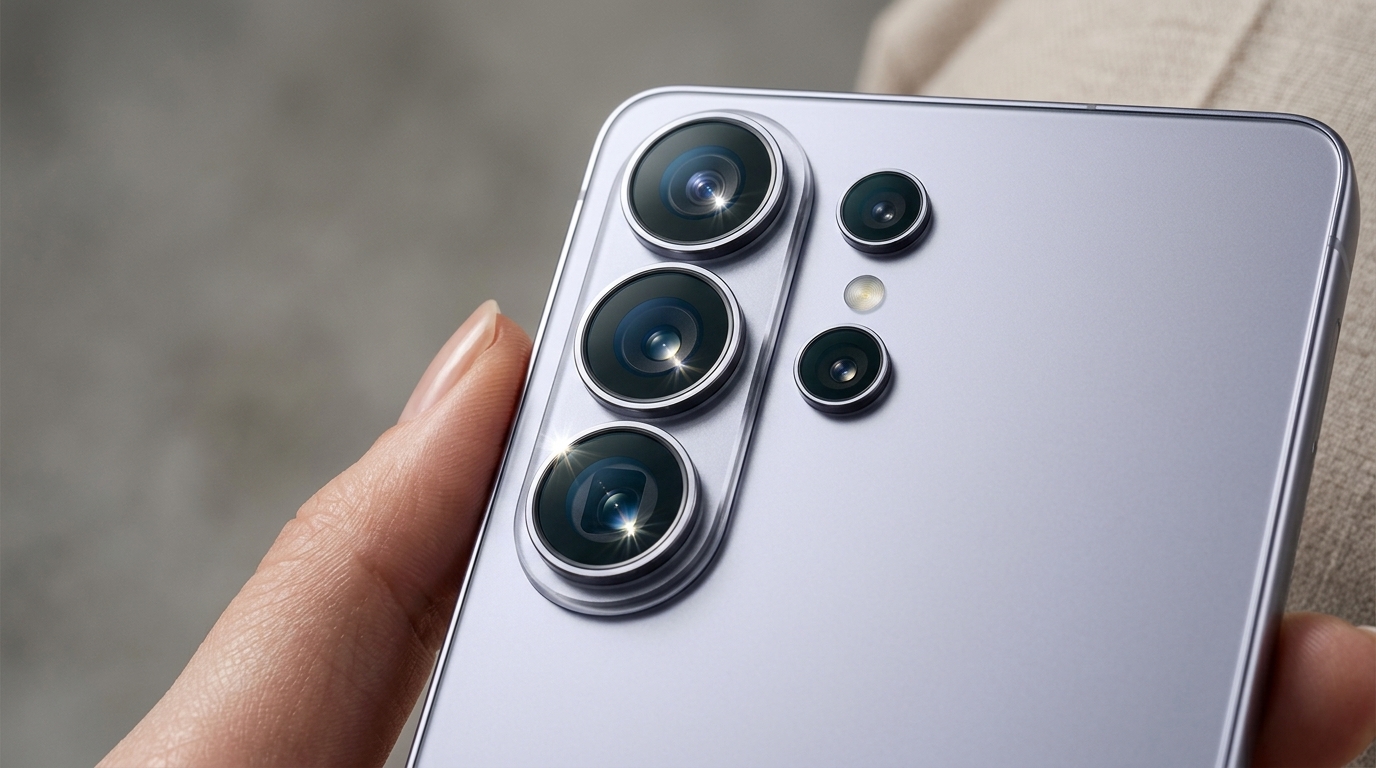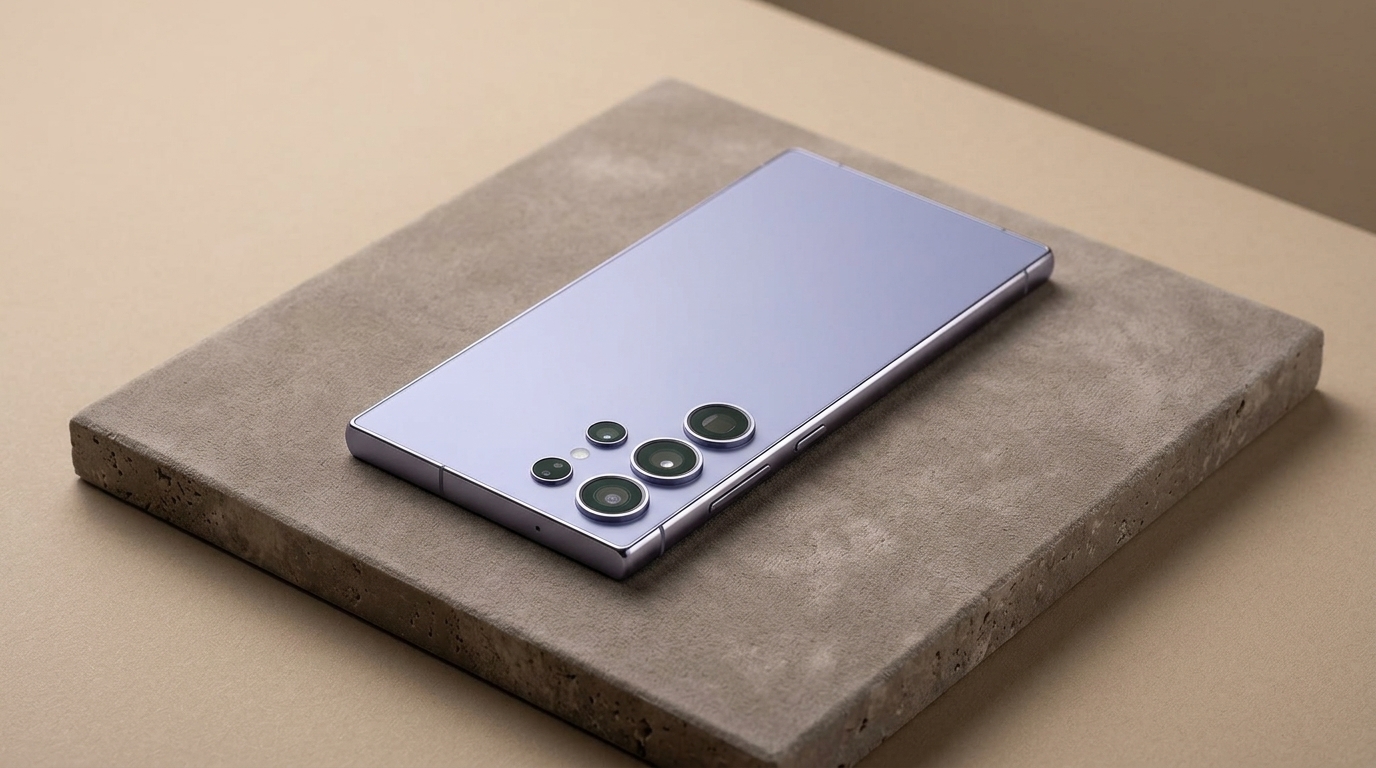

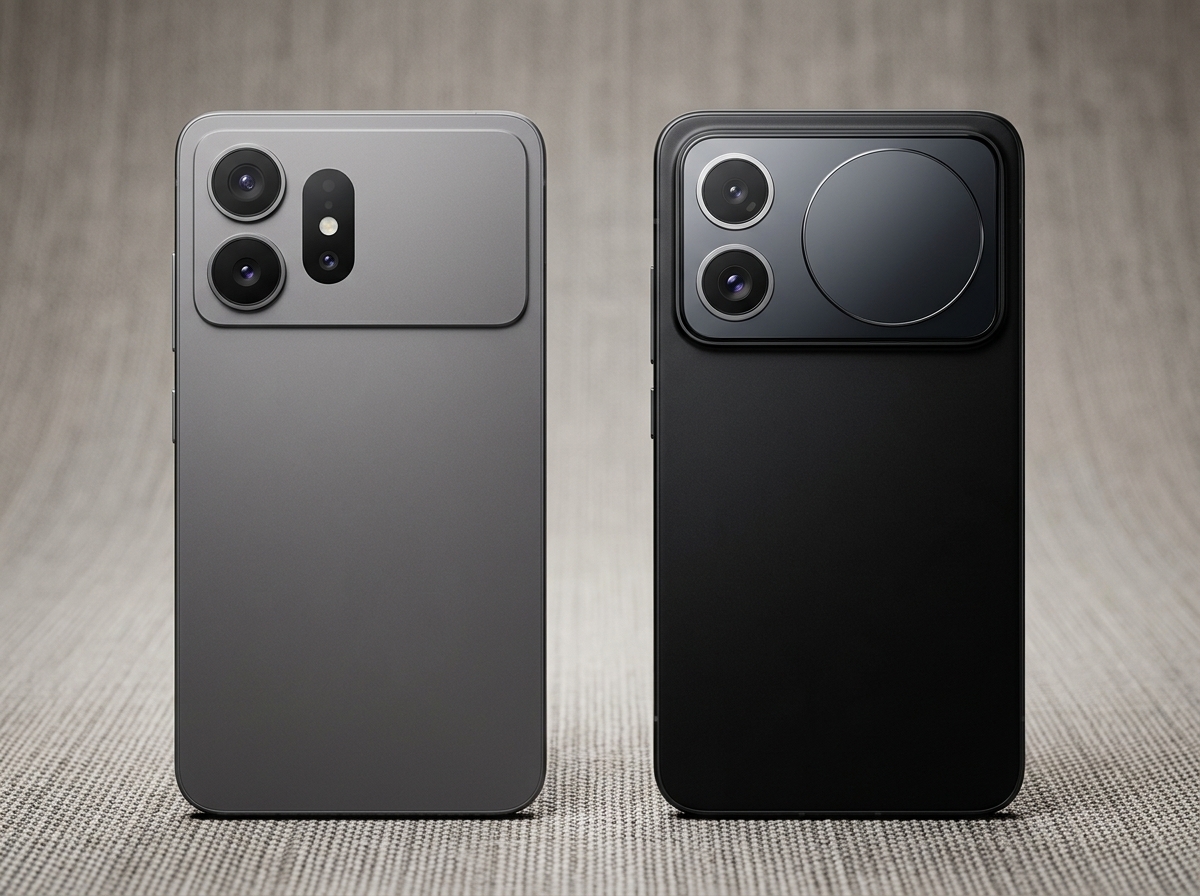
Xiaomi spent this week showing off the camera system inside its upcoming 18 Pro and 18 Pro Max, according to a report from Android Authority.
The timing feels deliberate. Samsung hasn’t officially revealed the Galaxy S27 Ultra’s camera upgrade yet, and leakers still can’t agree on what its telephoto lens will look like.
Placing both roadmaps side by side reveals a clear pattern, Xiaomi appears to be building specifically for the mid zoom range that Samsung’s 3x camera has struggled with for years.
That’s the real story behind this comparison right now, and it comes with an important caveat. Xiaomi’s numbers come from company teasers and Weibo posts, not independent lab testing or review units, according to the same Android Authority report.
The Galaxy S27 Ultra side is even less certain, since it’s based entirely on leaks, and those leakers don’t even agree with each other on the telephoto sensor, according to a Tech Advisor report from last week.
This breakdown focuses on the standard Xiaomi 18 Pro, not the Pro Max, since its light gathering claims are different and shouldn’t be assumed to apply to the base model.
Whether you already own a Galaxy Ultra and are deciding whether to wait for the S27 Ultra, or you’re simply curious if Xiaomi’s dual 200MP telephoto setup is a genuine leap forward, here’s a look at what’s confirmed, what’s still up for debate, and what to watch for once real review units arrive.
Where Each Phone Places Its Highest Resolution Sensor
Sensor placement matters more than the megapixel number printed on a spec sheet, since it determines how a phone handles portraits, indoor medium zoom shots, and the transition between 3x and 5x zoom. Xiaomi’s teasers show a full 200MP sensor sitting at the primary wide camera, measuring 1/1.28 inches, according to Android Authority.
The 18 Pro’s telephoto camera also carries a 200MP sensor, though a smaller 1/1.56 inch version, paired with a native 75mm focal length equal to 3.2x optical zoom and an f/2.4 aperture, the same report states. It’s also said to support pseudo macro focusing as close as 12cm, allowing it to work as a close up lens rather than just a portrait cropping tool.
Samsung, on the other hand, is expected to stick with a single 200MP sensor rather than putting high resolution on two separate lenses. That’s the key structural difference to watch, Xiaomi is placing a dedicated, sizable sensor at the exact focal length Samsung’s Ultra lineup has historically underserved, while Samsung relies on one main sensor to handle more of the zoom duties.
That underserved focal length has a history behind it. Samsung hasn’t made a meaningful upgrade to its 3x camera since it first appeared on the Galaxy S21 Ultra back in 2021, and it still uses a cramped 1/3.94 inch sensor paired with a slow f/2.4 aperture, according to an earlier Android Police report from this year.
Xiaomi’s 3.2x telephoto reads like a native optics response to that same weak spot, real glass and a dedicated sensor positioned at the distance Samsung’s current hardware handles worst, rather than a digital crop dressed up as optical zoom.
Two things are worth keeping in mind before drawing conclusions from that spec sheet. Xiaomi’s previous flagship, the 17 Ultra, supported LOFIC processing for stronger HDR, and it’s possible the 18 Pro carries that feature forward, but Xiaomi’s own teasers haven’t confirmed it for this camera system, so any HDR advantage should be treated as unverified for now.
Separately, the widely cited 83 percent light gathering improvement actually belongs to the 18 Pro Max, not the standard 18 Pro, according to Android Authority, so that figure shouldn’t be used when comparing against the Galaxy S27 Ultra.
The Galaxy S27 Ultra Leak Situation Confirmed vs Disputed
Separating fact from speculation matters here, since the Galaxy S27 Ultra rumor chain involves multiple leakers making conflicting claims, while Xiaomi’s numbers at least trace back to the company itself.
Confirmed by Xiaomi’s own teasers but still awaiting independent testing are the dual 200MP main and telephoto specs described above, per Android Authority.
Not yet confirmed for the standard 18 Pro are LOFIC HDR support and the 83 percent light gain figure, both either left unmentioned in the teasers or tied specifically to the Pro Max.
Android Police reports that Samsung may remove its 3x camera entirely for the S27 Ultra and instead rely on a new 200MP main sensor. Android Authority reports that this new sensor, referred to as HP6, may boost light sensitivity while keeping the same physical size as its predecessor.
Leakers themselves disagree here too, according to Tech Advisor. Ice Universe insists the S27 Ultra will keep its current 5x telephoto and 1/2.52 inch sensor unchanged, calling a competing report completely false, while WinFuture’s Roland Quandt claims a 50MP Sony 5x sensor instead, along with a 50MP ultrawide camera and an upgrade from 12MP to 16MP on the selfie camera. None of these Galaxy S27 Ultra camera details carry official confirmation from Samsung.
Until Samsung says otherwise, both the 3x removal and the 5x sensor claims should be treated as competing possibilities rather than settled specs. The public leaks around the telephoto hardware actively contradict one another, which is reason enough to wait for an official Unpacked reveal before forming conclusions.
Can a Bigger Main Camera Really Replace a Dedicated Telephoto Lens
Samsung’s rumored approach for the S27 Ultra isn’t really about a bigger sensor, it’s about a busier one. Instead of upgrading its aging 3x lens, Samsung is reportedly planning to drop it altogether and let the main camera cover that zoom range instead, according to Android Police.
The reasoning makes some sense on paper, with a 200MP primary sensor and a 5x periscope telephoto already in place, a weak and neglected 3x lens simply isn’t earning its spot, the same report notes.
The sensor said to be handling that extra workload, known as HP6, reportedly improves light sensitivity compared to Samsung’s current 200MP sensor while staying the same physical size as its predecessor, according to Android Authority.
That distinction matters. Sensor size mainly affects light gathering and noise levels rather than automatically producing sharper crops, since crop quality also depends on pixel pitch, exposure handling, lens resolution, and processing all working together.
Anyone comparing spec sheets once these phones launch should look closely at the actual physical sensor dimensions Samsung announces and the pixel pitch, not just marketing language about sensitivity.
Close focus shooting is one specific area worth watching. Xiaomi’s telephoto reportedly focuses as close as 12cm using dedicated macro optics, according to Android Authority, and it remains an open question whether a main sensor crop without similar optics can match that at short range.
Samsung’s own technical materials support the idea that a single 200MP sensor can stand in for multiple focal lengths.
The company stated three months ago that its Tetra squared pixel design retains 12.5MP of resolution through 4x in sensor zoom, compared with roughly 2x on a conventional 50MP sensor, according to Samsung Semiconductor.
That’s a genuine capability built into this sensor category, though it’s also company messaging about 200MP sensors in general rather than an independently tested result from the unreleased S27 Ultra.
Whether Samsung’s version of that capability actually performs well in practice is still unknown, not something that has already failed.
Phones from vivo and OPPO already support multi frame processing at full 200MP resolution, producing genuinely detailed 200MP portraits and night shots rather than pixel binned crops, according to an earlier Android Authority report from this year.
Whether the S27 Ultra can match that level of processing at launch is something reviewers will need to check, not something Samsung has already fallen short on.
An earlier comparison this year shows why sensor size claims need real world testing before they mean much. The vivo X300 Ultra’s main camera used a physically larger Sony sensor at 1/1.12 inches, compared with the 1/1.3 inch Samsung ISOCELL HP2 found in the Galaxy S23 Ultra, and the reviewer found the larger sensor captured more detail, according to Android Authority.
That same test also involved a difference in focal length, 35mm versus 24mm, between the two phones’ main cameras, which complicates any straightforward read on image quality alone.
It’s a useful reminder of how sensor size and focal length work together, not proof that any single sensor will automatically win the Xiaomi 18 Pro Max versus Galaxy S27 Ultra matchup once both phones ship.
What Actually Makes a 200MP Camera Good Beyond the Marketing Number
Resolution alone doesn’t tell buyers much, and this is where many spec sheet comparisons fall short. TechInsights carried out a technical comparison of Samsung’s ISOCELL HP5, Sony’s LYT 901, and OmniVision’s OV52A, the three leading 200MP sensor designs, and found real architectural differences in pixel pitch, HDR approach, and autofocus design despite all three sharing the same 200MP label, according to TechInsights.
Sony’s sensor uses a 0.70 micron pixel pitch along with dual conversion gain HDR and hybrid frame HDR processing, while OmniVision’s version uses a smaller 0.61 micron pitch, according to the same analysis published two months ago.
This is a comparison of sensor architecture and design choices rather than a ranked judgment on which sensor takes better photos, since real world image quality still depends heavily on the lens, processing pipeline, and software tuning built around each component.
That range of differences matters directly for this comparison. Whichever supplier ends up inside Samsung’s HP6 or Xiaomi’s telephoto sensor, the megapixel figure on a spec sheet won’t reveal how well either phone handles HDR scenes, autofocus speed, or fine detail when cropping in. Those differences only show up through teardown analysis and real world review samples, not marketing copy.
This is also why grouping the Xiaomi 18 Pro Max together with the standard 18 Pro against Samsung’s flagship oversimplifies things. The Pro Max reportedly claims a larger light gathering boost than the standard 18 Pro, so treating both Xiaomi models as a single camera system blurs a distinction that genuinely affects image quality. Buyers should keep the exact model names straight once official pricing and availability are announced.
What to Check Before Trusting Any Camera Samples
Xiaomi’s dual 200MP claims are still teaser material waiting on hands on testing, not confirmed shipping specifications. Samsung’s HP6 sensor, the rumored removal of its 3x camera, and its telephoto resolution all remain contested leaks with no official word from Samsung, according to Android Authority and Tech Advisor.
Once independent review units for both phones become available, a few specific checks will separate a real camera upgrade from a spec sheet win. First, confirm whether Samsung kept a dedicated 3x lens or ended up relying entirely on a main sensor crop for that zoom range.
Second, look at the physical sensor size and pixel pitch Samsung actually announces rather than just the resolution number shown on a slide.
Third, seek out matched condition indoor portrait samples shot at 3x, 4x, and 5x from independent reviewers, ideally including moving subjects and close focus shots where autofocus speed becomes obvious. Finally, compare shutter speed, fine detail retention, skin tones, and consistency across that zoom range against the Xiaomi 18 Pro once both phones can be tested side by side.
It’s worth holding off on any pre order decisions based purely on either company’s spec sheet. Official Unpacked details and independent camera reviews, not teaser claims from Weibo posts or leaker threads, are what will ultimately determine which approach wins the mid zoom range.