
Samsung’s Galaxy SmartTag3 went on sale in South Korea yesterday, 7 October 2026, and the headline change is one that owners have requested for years. For the first time in the SmartTag line, the Bluetooth tracker works with iPhones as well as Galaxy phones, opening Samsung’s finding network to households that mix Android and Apple devices. There is a catch though. Several of the tracker’s best features remain exclusive to Galaxy phones, and UK buyers will have to wait, because Samsung has not announced a British release date or price yet.
Galaxy SmartTag3 iPhone Support: What Works and What Does Not
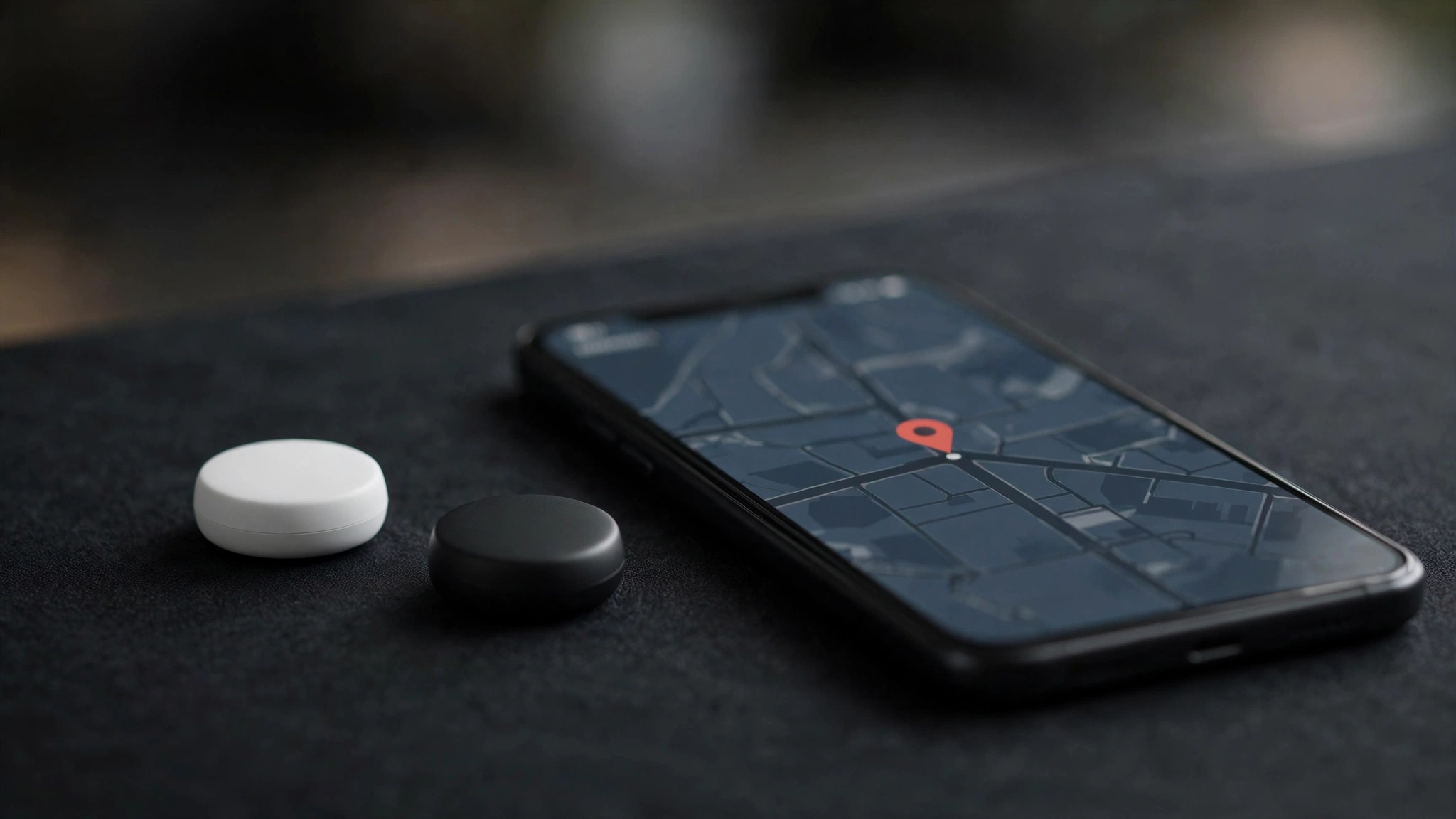
The cross-platform support arrives through the SmartThings app, which now runs on iPhones with iOS 17 or later alongside Galaxy phones and tablets on Android 12 or later. An iPhone owner can register a tag directly through SmartThings and find a nearby tag or receive shared access from a Galaxy owner, so both people can see the same tag’s location. That makes the tag genuinely useful in mixed households, where one partner carries a Galaxy and the other an iPhone.
But the iPhone experience is a cut-down version. Samsung confirms that Compass View, the directional finding screen, does not work on iOS. Neither does the Left Behind Alert, nor the option to ring a connected phone by pressing the tag’s button. In other words, an iPhone can show you where a tag is on a map, but it cannot guide you to it with on-screen arrows the way a Galaxy phone can.
- Finding a nearby tag and viewing shared tags: works on iPhone
- Compass View directional guidance: Galaxy only
- Left Behind Alert: Galaxy only
- Ring phone from the tag button: Galaxy only
- Contributing sightings to the Galaxy Find Network: Galaxy only
- Unknown tag safety alerts on iOS: Samsung has not confirmed
The network point matters most. Samsung says more than 900 million Galaxy devices worldwide act as anonymous finding nodes, quietly updating a lost tag’s position when one passes nearby. An iPhone running SmartThings does not feed sightings back into that network, so recovering a tag that is out of Bluetooth range still depends on how many Galaxy devices happen to be around, not on how many iPhones are nearby. The tag also does not connect to Google’s Android Find Hub.
Samsung has confirmed that iPhone users can register and set up a tag on their own through SmartThings, with no Galaxy device required. The one question still unanswered is whether iPhone users get the same unknown tag alerts that warn Galaxy users about unfamiliar trackers following them.
Smaller Build, Bigger Battery and Triple the Finding Range
Beyond the iPhone support, the hardware itself is a solid step up. The SmartTag3 is about 35 per cent smaller by volume and 33 per cent lighter than the SmartTag2, with a more rounded design that keeps the physical button. It comes in White and Black, with new Silicone Case and Loop Case accessories.
Battery life is rated at up to 550 days under standard use, stretching to 790 days in Power Saving Mode, which should mean most owners never think about the battery. The tag carries an IP67 rating for dust and water resistance, and NFC-based Lost Mode carries over, letting anyone who finds a lost tag scan it to see the owner’s contact details.
The standout upgrade is Bluetooth 6.0 Channel Sounding, which extends Compass View’s directional guidance to up to 60 metres in line-of-sight conditions, roughly triple the previous generation. At launch it works with the Galaxy S26 Ultra, Galaxy S26 Plus, Galaxy Z Fold8 and Galaxy Z Fold8 Ultra, with more devices expected later. Standard Bluetooth LE detection reaches up to 120 metres, and ultra-wideband is on board too. For a closer look at the flagship it pairs with, see our Galaxy S26 Ultra review.
What It Means for UK Buyers
The SmartTag3 lands in a market dominated by Apple’s AirTag, which remains the default choice for iPhone owners, and Google’s Pixel Tag for Android users. Samsung’s pitch is the middle ground: one tag that works across both camps, backed by a finding network of more than 900 million Galaxy devices. For mixed households, that is genuinely new.
The frustration is the timing. The tag went on sale in Korea yesterday, 7 October, and reaches the United States in early November priced at $29.99 for a single tag or $99.99 for a four-pack, with Samsung planning additional markets in 2027. There is no confirmed UK release date and no British price yet, so UK buyers cannot buy one today. Anyone weighing it against an AirTag should also note that the iPhone feature list is still incomplete, with safety alerts and standalone setup unconfirmed.
Our advice: Galaxy owners in the UK can treat the Korea launch as the starting gun for hands-on impressions, but should hold off until Samsung confirms British pricing and the full spec sheet. iPhone owners in all-Apple households will likely find the AirTag a safer bet until Samsung spells out the iOS feature list in full.