

Samsung does not do subtle when it launches an Ultra phone. The Galaxy S26 Ultra arrived in February 2026 as the biggest, most expensive phone in the Galaxy S range, and it keeps last year’s starting price of £1,279 in the UK despite costing more in some other markets. The question is simple. With the iPhone 18 Pro sitting at £1,199 and Google’s Pixel 11 Pro XL at the same £1,279, does the Ultra earn its place as the Android phone to beat?
On paper it is hard to argue. You get the fastest Snapdragon chip Samsung has ever shipped, a 200MP camera system with wider apertures than before, a brighter privacy enabled display and seven years of software updates. In practice the upgrades over last year’s S25 Ultra are smaller than the spec sheet suggests, but the overall package still feels like the most complete phone you can buy right now.
Design and build quality
At first glance the S26 Ultra looks almost identical to its predecessor. Look closer and the changes start to show. Samsung has softened the corners slightly so the big slab sits more comfortably in the palm, and the phone is a touch taller and wider while getting slimmer at 7.9mm. At 214g it is still a hefty device, so one handed use remains a two finger balancing act rather than a comfortable grip.
The controversial change is under the skin. Samsung has dropped the titanium frame used by recent Ultras in favour of Armor Aluminum. The company says the switch helps with weight and heat dissipation, and the phone does feel well balanced. Still, anyone who has had a titanium frame save their phone from a nasty drop may see it as a step backwards.

Durability is strong on paper. The front is protected by Gorilla Armor 2, the back by Gorilla Glass Victus 2, and the whole thing carries an IP68 rating against dust and water. Colour choice is generous too, with Cobalt Violet, Sky Blue, Black, White, Silver Shadow and Pink Gold all on the menu in most regions.
Display, a quiet but meaningful upgrade
The 6.9 inch Dynamic AMOLED 2X panel is one of the best displays on any phone you can buy. Resolution stays at 3120 by 1440 with an adaptive 1 to 120Hz refresh rate, and in daily use everything from scrolling to gaming looks silky smooth. Peak brightness is high enough that outdoor readability is never a problem, even in harsh midday sun.
Samsung has improved its ProScaler technology, which cleans up lower resolution video so it looks sharper on the high resolution panel. Support for the mDNI codec should also mean colours render with more precision across a wider range. The standout new trick is the Privacy Display mode, which narrows viewing angles on demand so nosy neighbours on the train cannot read your messages. It is the sort of feature that sounds gimmicky until you commute on the Northern line at rush hour.
Performance that never breaks a sweat
Inside is the Snapdragon 8 Elite Gen 5 for Galaxy, a Samsung exclusive version of Qualcomm’s flagship chip with boosted clock speeds. Paired with 12GB of RAM on the 256GB model or 16GB on higher storage tiers, the phone flies through everything. Multitasking with split screen apps, editing 4K video and playing demanding games all feel effortless, and the phone stays impressively cool under sustained load.

Benchmarks put it ahead of every other Android phone on sale and comfortably past last year’s model. For most buyers the honest truth is that this much power is overkill, but it does mean the phone will still feel fast in four or five years, which matters when you are paying well over a grand.
Camera, better glass rather than more megapixels
The camera hardware reads like a spec sheet arms race. The main sensor is 200MP with a wide f1.4 aperture, backed by a 50MP ultrawide at f1.9, a 10MP 5x telephoto at f2.4 and a 50MP 10x telephoto at f2.9. The selfie camera is 12MP. The headline change is the wider apertures on the main and 5x lenses, which let in noticeably more light.
In good light the results are superb. Shots are detailed without looking over processed, colours are punchy but believable, and the 5x telephoto is genuinely useful for gigs and football matches. Low light performance is where the new apertures earn their keep, with night shots looking cleaner and less smeary than on the S25 Ultra. The 10x zoom is fun but quality drops off quickly, and for everyday shooting the difference over last year’s phone is modest rather than dramatic.
Video is excellent, with smooth stabilisation and strong dynamic range up to 8K. Samsung’s AI editing tools can remove photobombers and tidy up backgrounds with a tap, and they work better than ever on the new chip.
Battery life and charging
The 5,000mAh battery is the same capacity as last year, but efficiency gains from the new chip mean it comfortably lasts a full day of heavy use. Lighter users will easily stretch to a day and a half. Charging is where Samsung has finally moved the needle, with Super Fast Charging 3.0 pushing well over half the battery back in around 15 minutes and past 80 per cent in about half an hour. That is a real quality of life upgrade over previous Ultras.
The one frustration is the continued absence of Qi2 magnetic charging. Given that Apple and Google both support magnetic accessories, Samsung’s omission feels behind the curve on a phone at this price.

Software and Galaxy AI
The phone ships with One UI 8.5 on top of Android 16, and Samsung promises seven years of operating system and security updates. That is class leading support that matches Google and beats most rivals, and it makes the high price easier to swallow over the long term.
Galaxy AI is woven through the whole experience. Live translation handles phone calls in dozens of languages, photo editing is genuinely one tap, and the on device AI features run fast on the new chip. Some features still feel like tech demos, but the useful ones, like call screening and smart summarisation, are getting hard to live without.
The S Pen still has no real rival
The built in S Pen remains the Ultra’s secret weapon. No other flagship has a proper stylus silo, and for note taking, sketching and precise photo editing it is brilliant. Placement of the slot has drawn some grumbles from left handed users, but if you have ever wanted a phone that doubles as a notepad, nothing else comes close.
UK price and where to buy
In Britain the Galaxy S26 Ultra starts at £1,279 for the 256GB model, rising to £1,449 for 512GB and £1,699 for 1TB. That is unchanged from the S25 Ultra launch price, which is good news given the price rises Samsung pushed through in Korea. The phone is on sale now from the Samsung UK store, Currys and Amazon.co.uk, and all four major networks, EE, O2, Vodafone and Three, offer it on contract.
As always with Samsung flagships, shop around. Trade in deals regularly knock hundreds off, and the street price typically falls within a few months of launch. If you can wait for the Black Friday sales, previous Ultras have dropped by £300 or more.
Verdict
The Galaxy S26 Ultra is not a revolution. If you own an S25 Ultra, the upgrades in design polish, camera apertures and charging speed are not worth another £1,279. But judged on its own merits, this is the most complete Android phone on the market. The display is superb, performance is best in class, the cameras are excellent, battery life is strong and seven years of updates means it will stay relevant for a very long time.
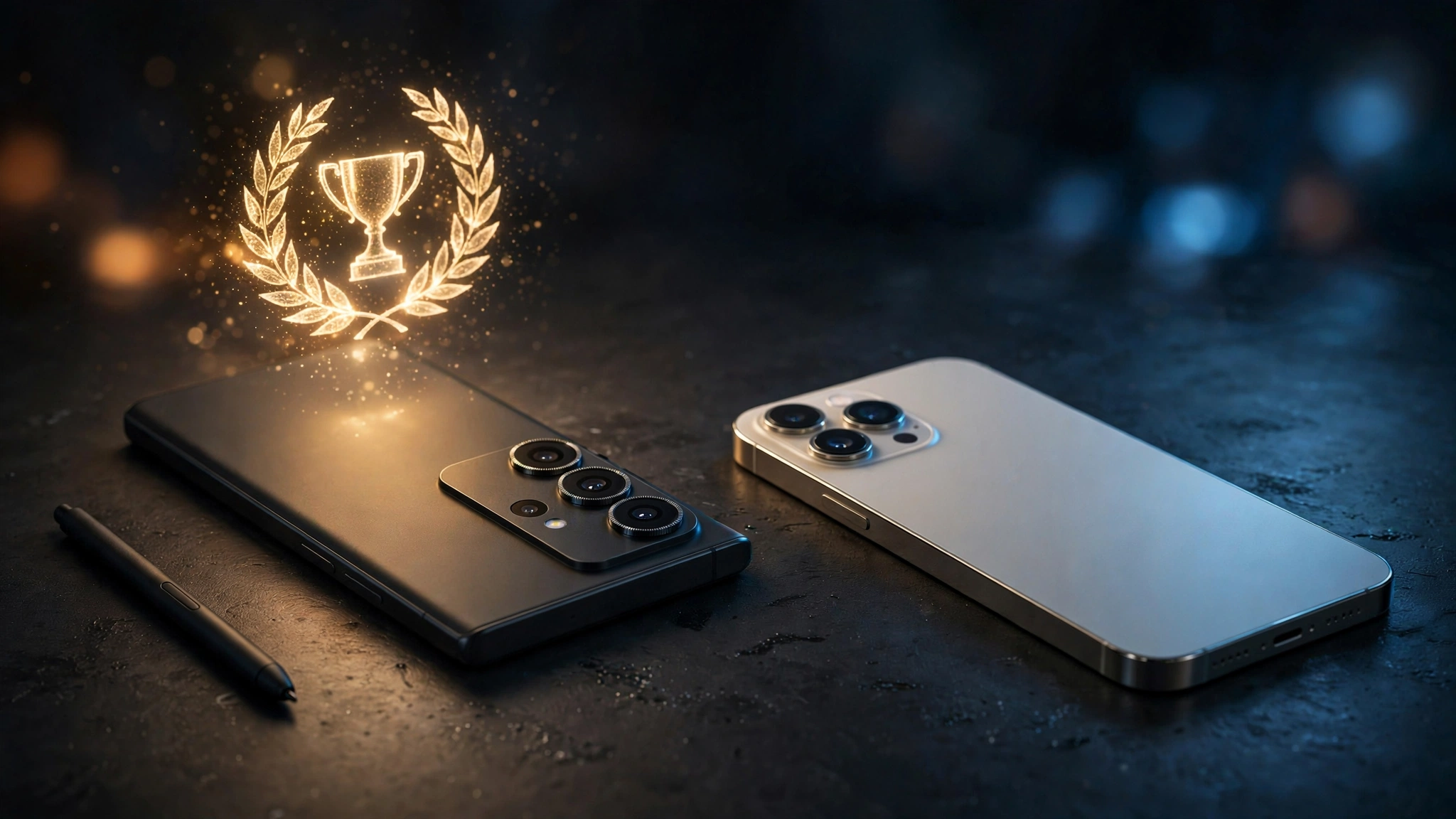
At £1,279 it sits at exactly the same price as Google’s Pixel 11 Pro XL and £80 above the iPhone 18 Pro. Pick the Pixel for the smartest camera software and the iPhone for the tightest ecosystem, but if you want the phone that does everything and does it well, the S26 Ultra is the one to beat in 2026.